
Empowering Customers to Regain Financial Freedom with EasyPay
Bread Financial
Role: Business strategy, research planning, user observation, user scenarios, design concepts, card sorting, user flows, testing plans, visual design, KPI definition, and UX project manager
Team: Content Strategist, UX Manager, Product Owner; ZoCo Design researchers, project manager, and principal.
Timeline: 6+ months
We hypothesized that by understanding and addressing the emotional and informational needs of cardholders in collections, we could encourage timely payments, restore spending power, and build long-term customer loyalty.
Problem
How might we empower cardholders in collections to settle debts online, maximizing payment revenue and restoring their spending power during a global crisis like COVID-19?We asked our friends from ZoCo Design to help us understand the mindset of cardmembers and answer this complex question.
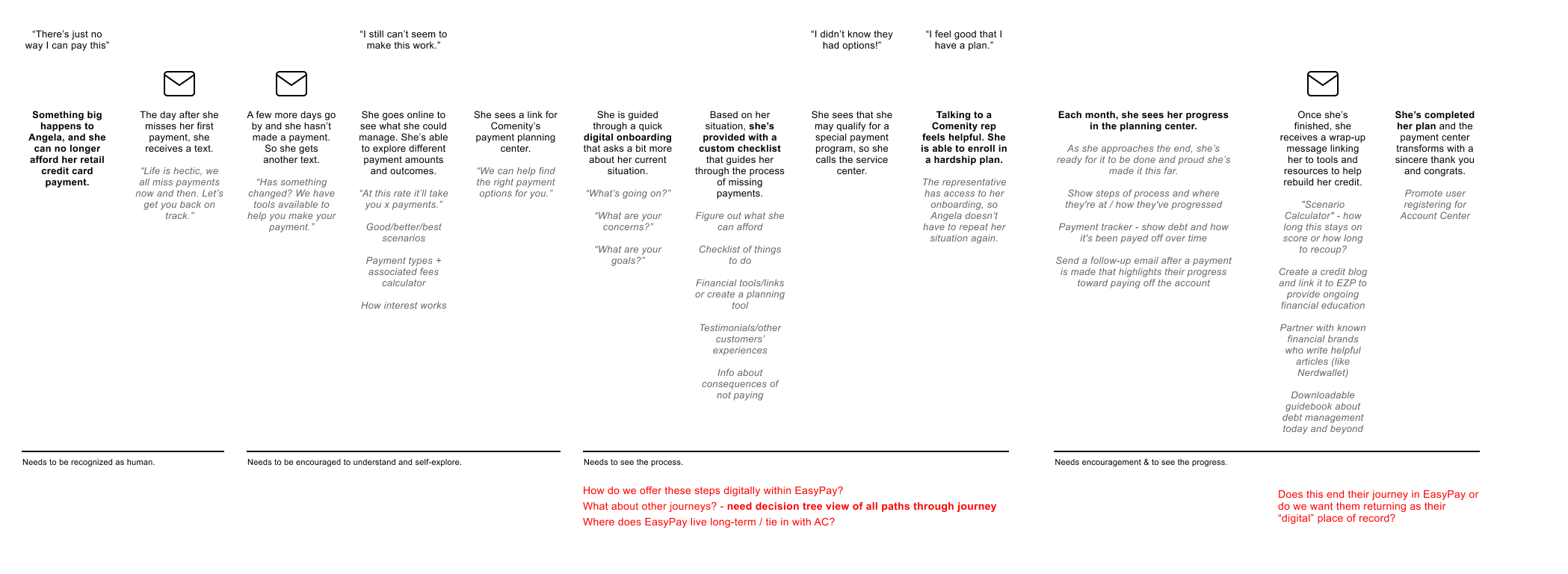
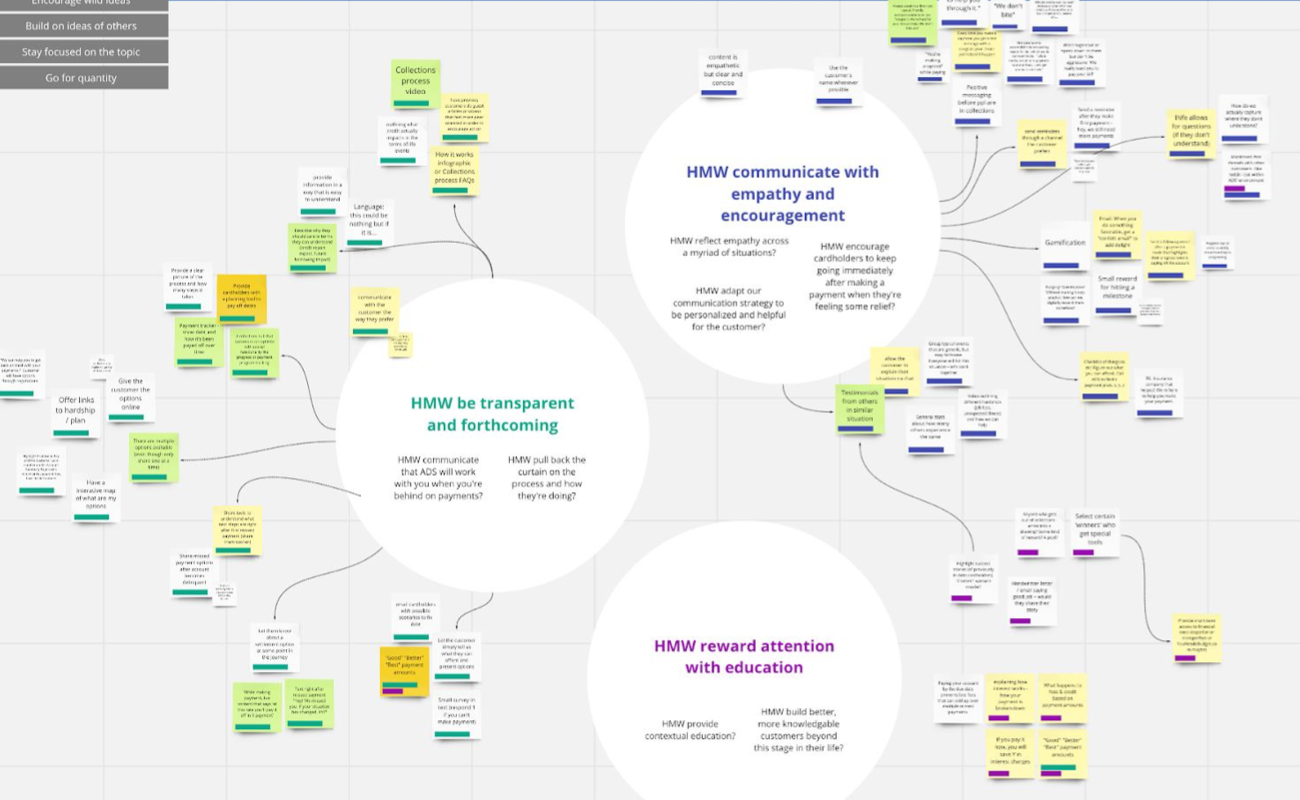
A key part of making these users successful would be helping them understand their payment options and educating them on how the collections process works.
Solution
We learned that many customers don’t understand the collections process. This lack of understanding often leads to avoidance and anxiety. By providing clear and simple explanations, we could make the process less intimidating.
We took important moments from the customer experience and turned them into simple sketches to share with our partners and developers. They helped us decide which ideas would benefit customers and the business most while also being practical to create.
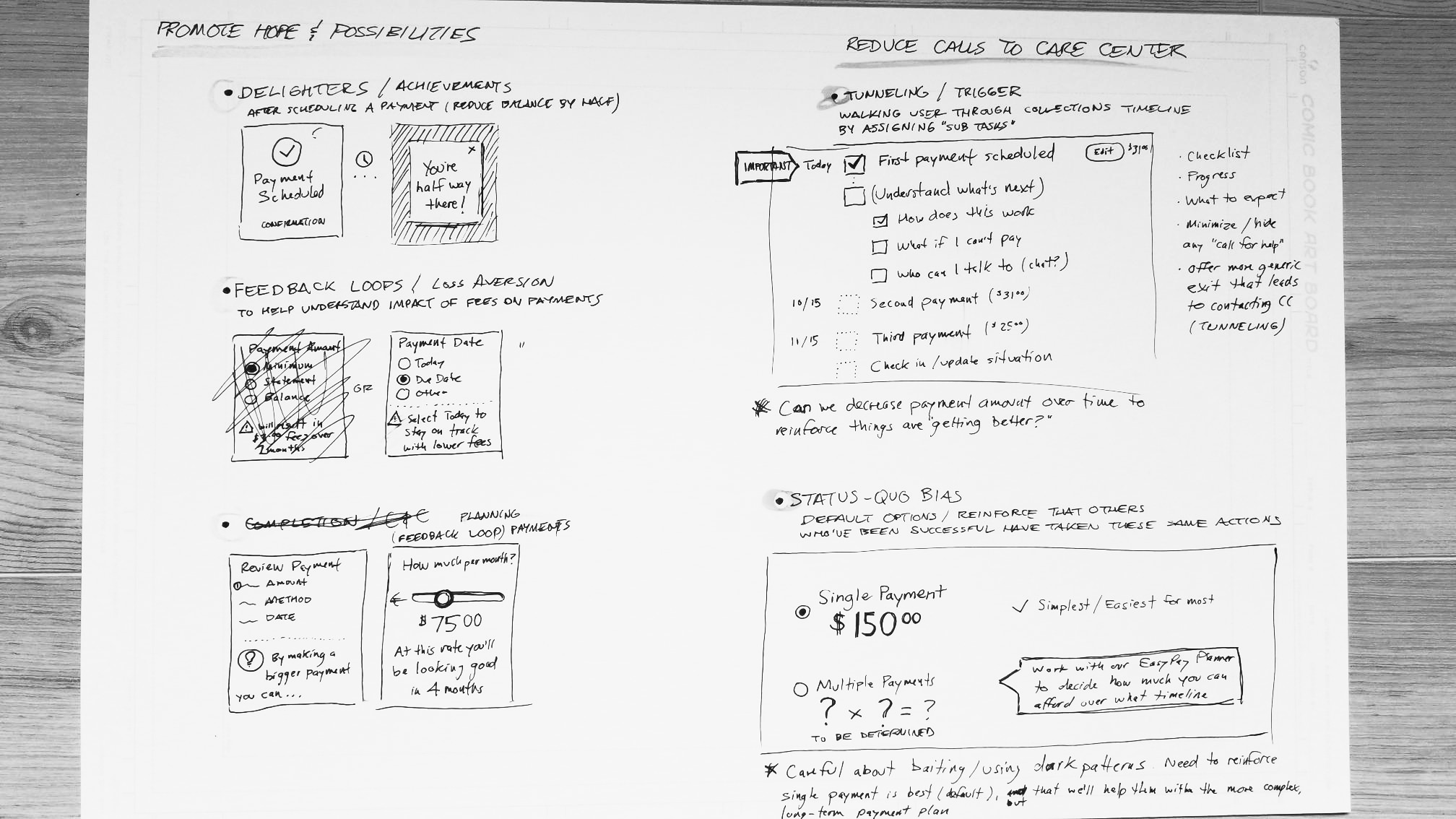
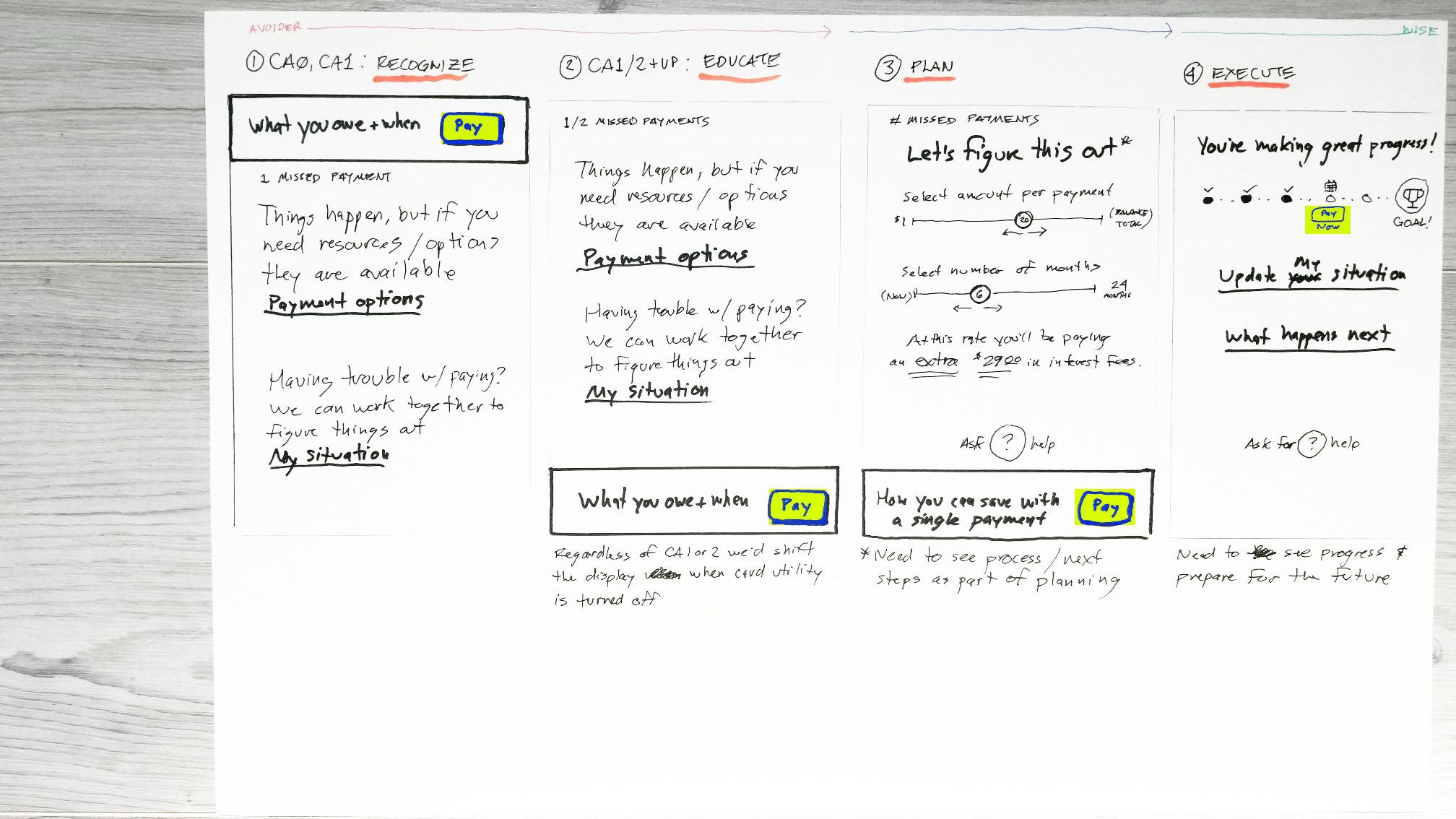
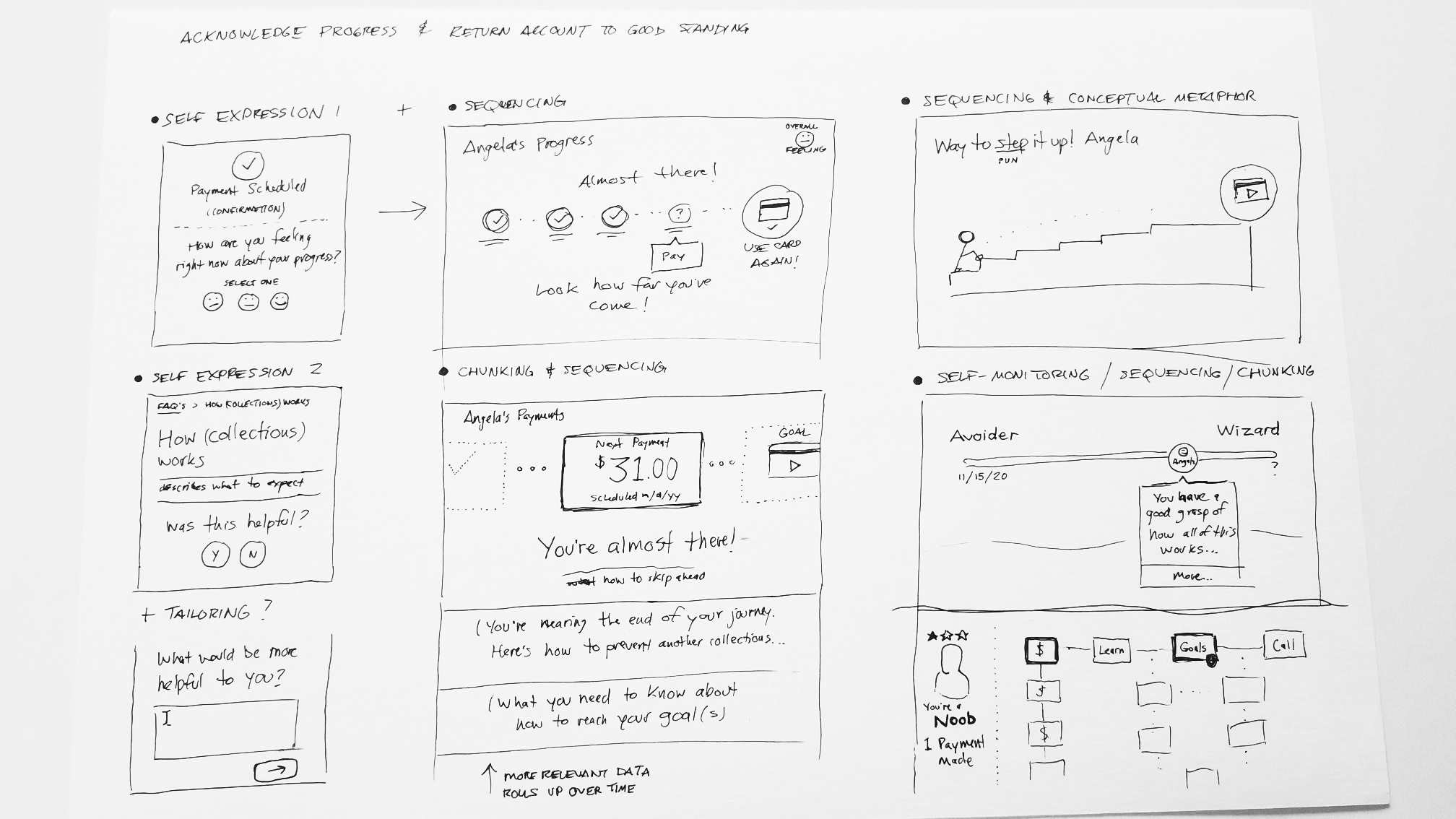
While voting, we granted extra points to any ideas the team thought would help educate customers on the collections process. Using the winning concepts, we set out to figure out the best way to present previously complex information to customers.
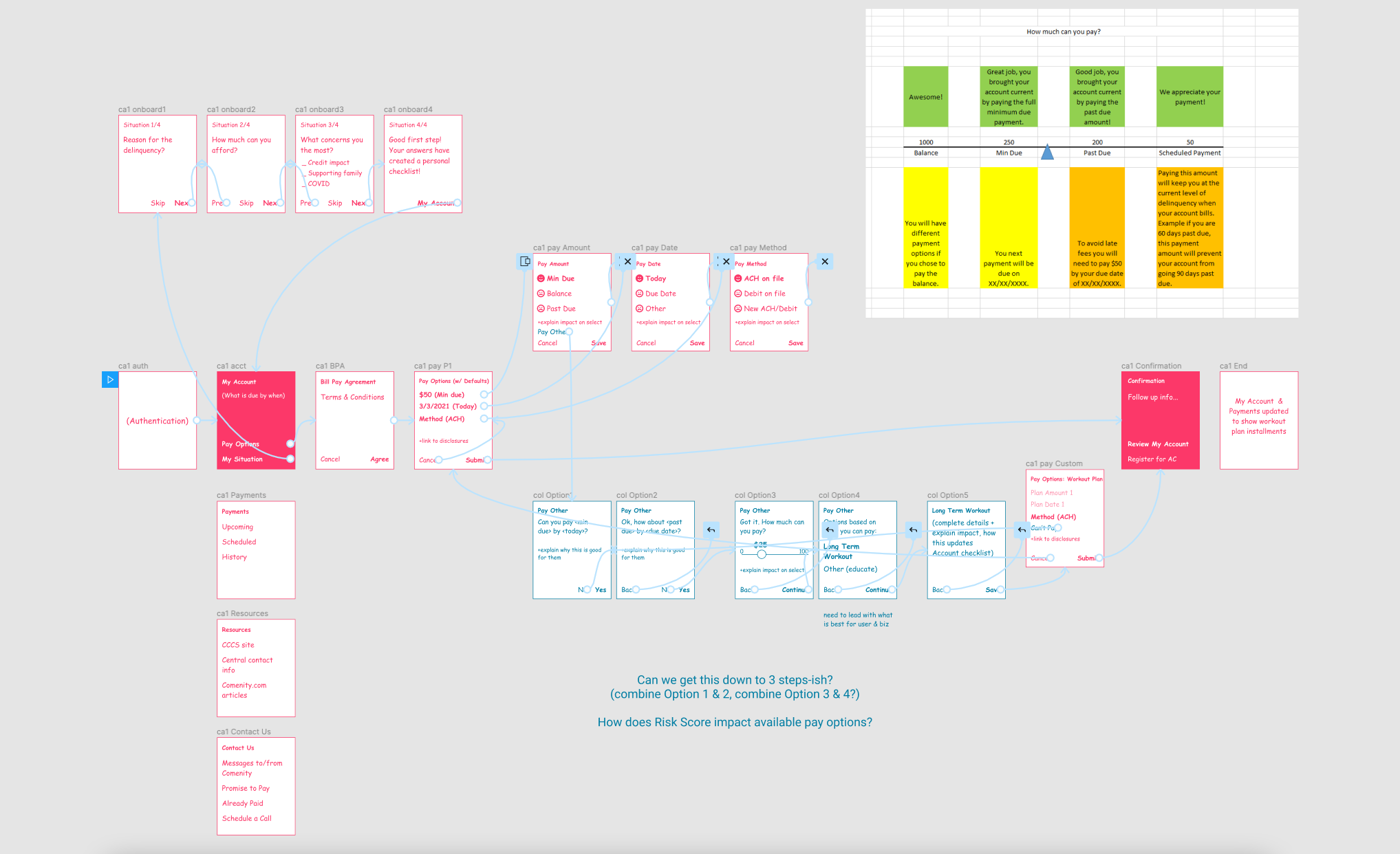
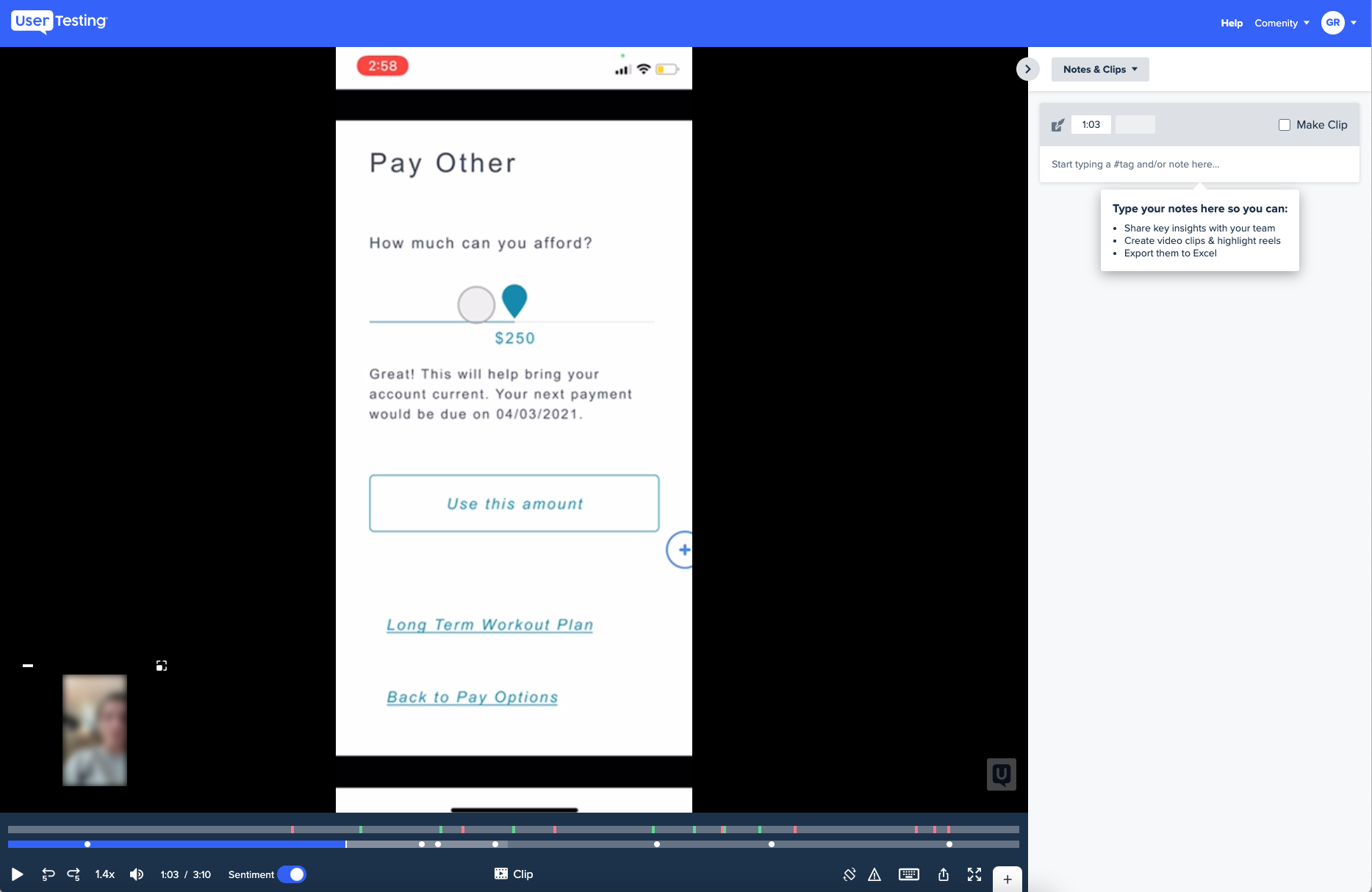
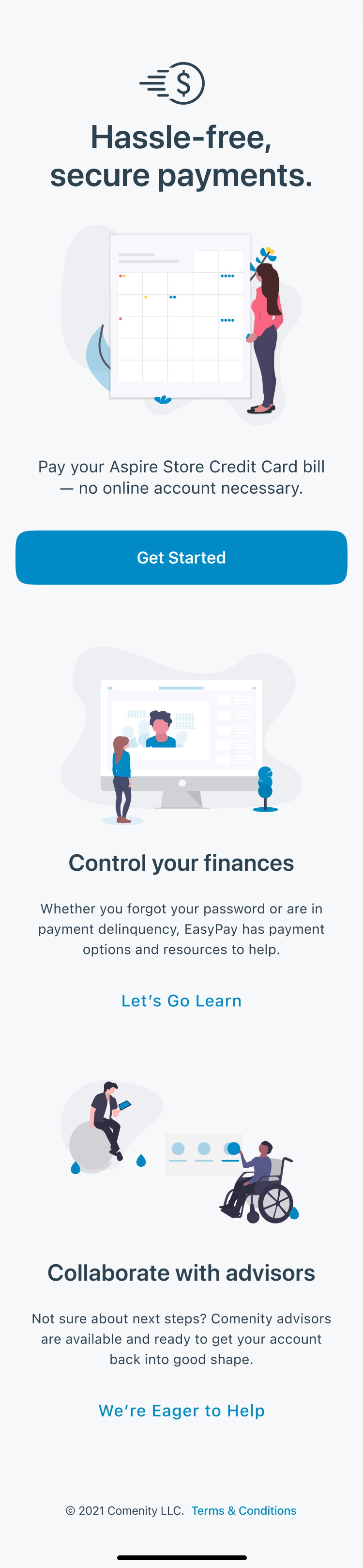
A unique challenge was making EasyPay feel like a trusted advisor, offering a calming and supportive experience. Comenity, the company behind brands like IKEA and Victoria’s Secret credit cards, isn’t always familiar to users. We worked to build trust by designing a soft, approachable interface that avoided the stark, impersonal feel often seen in financial and collections materials.
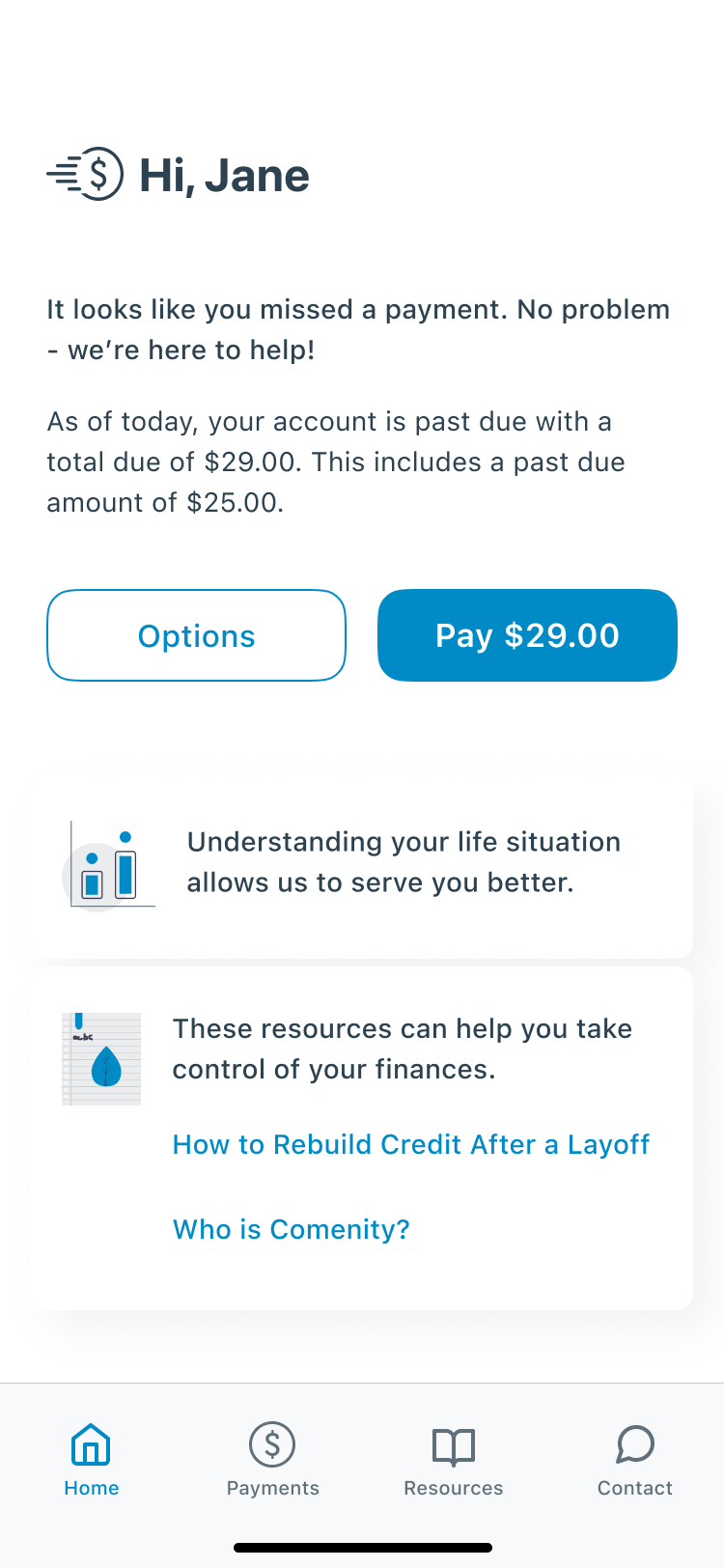
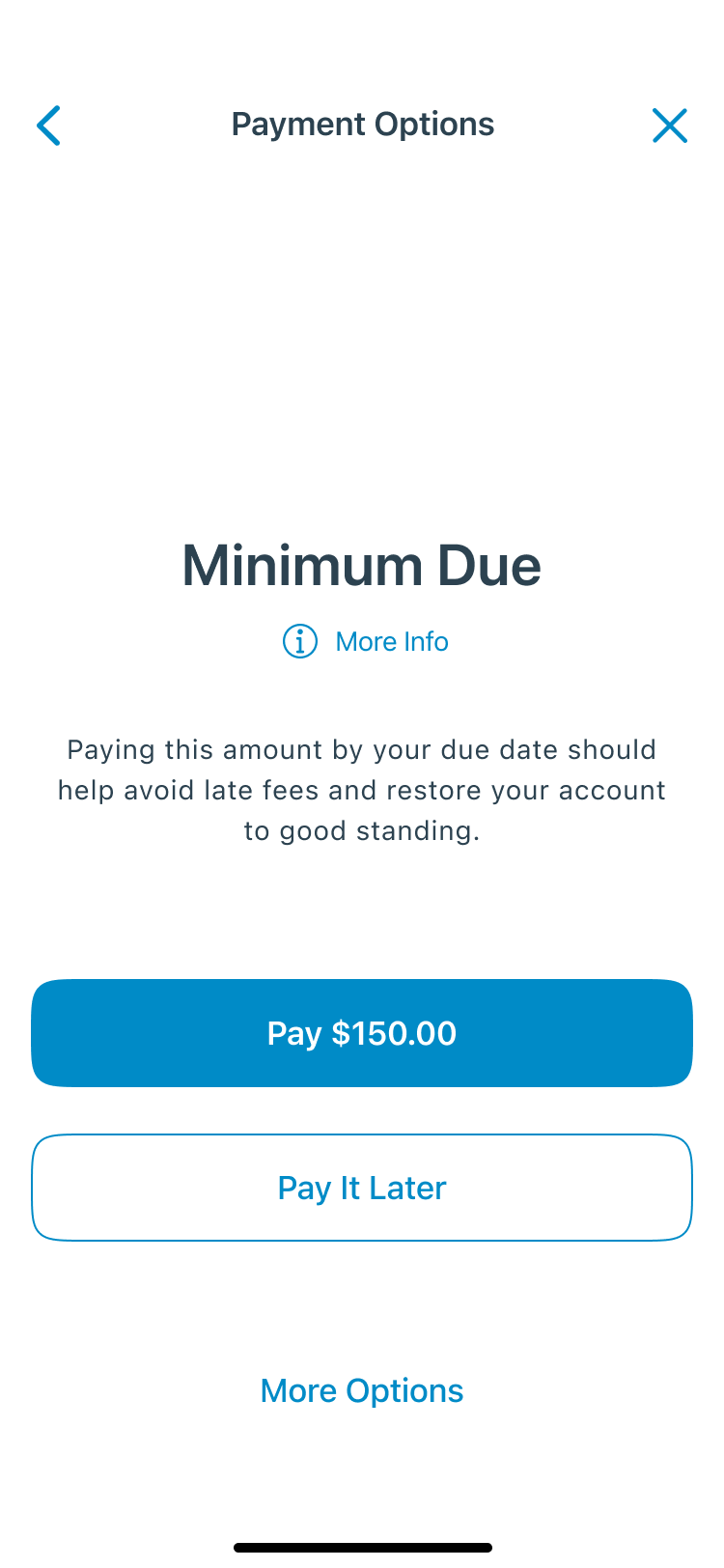
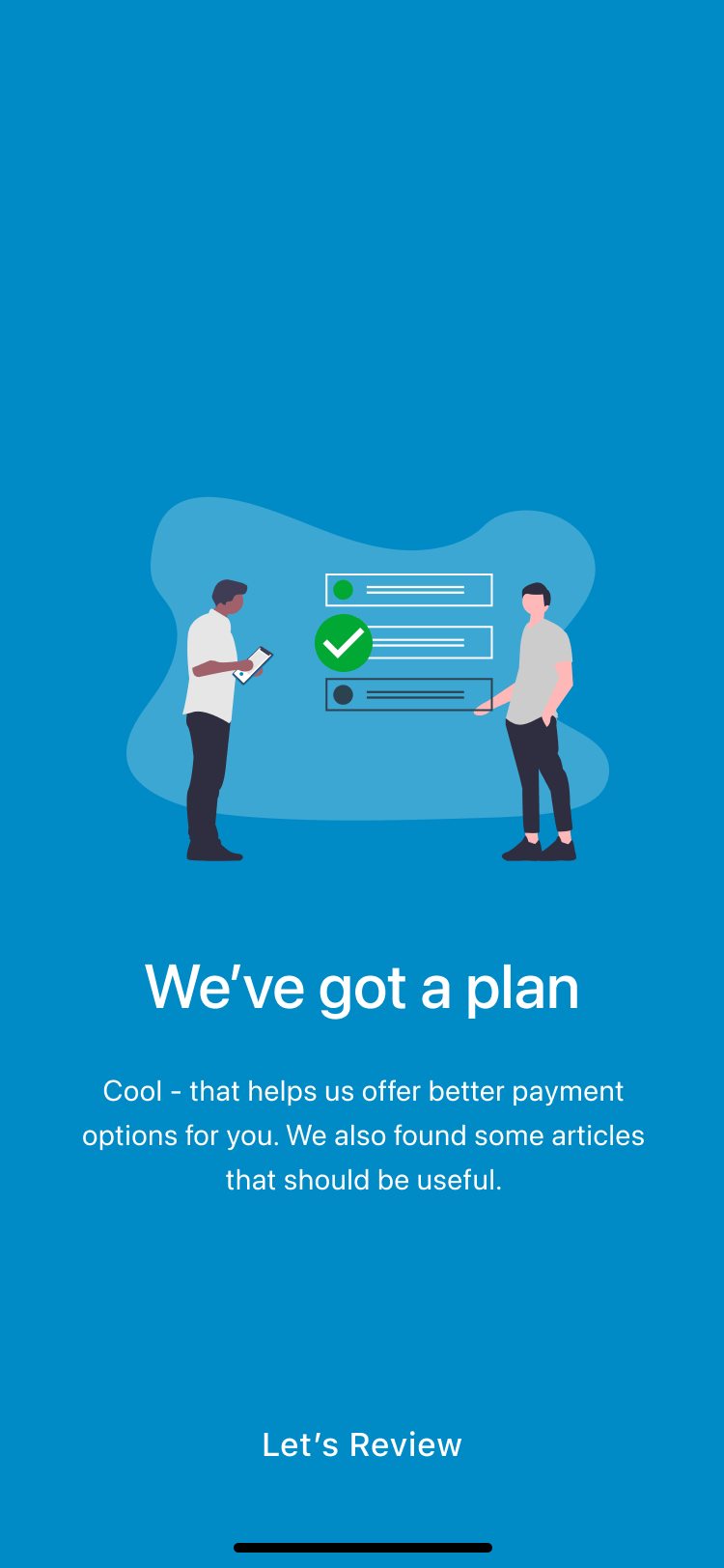
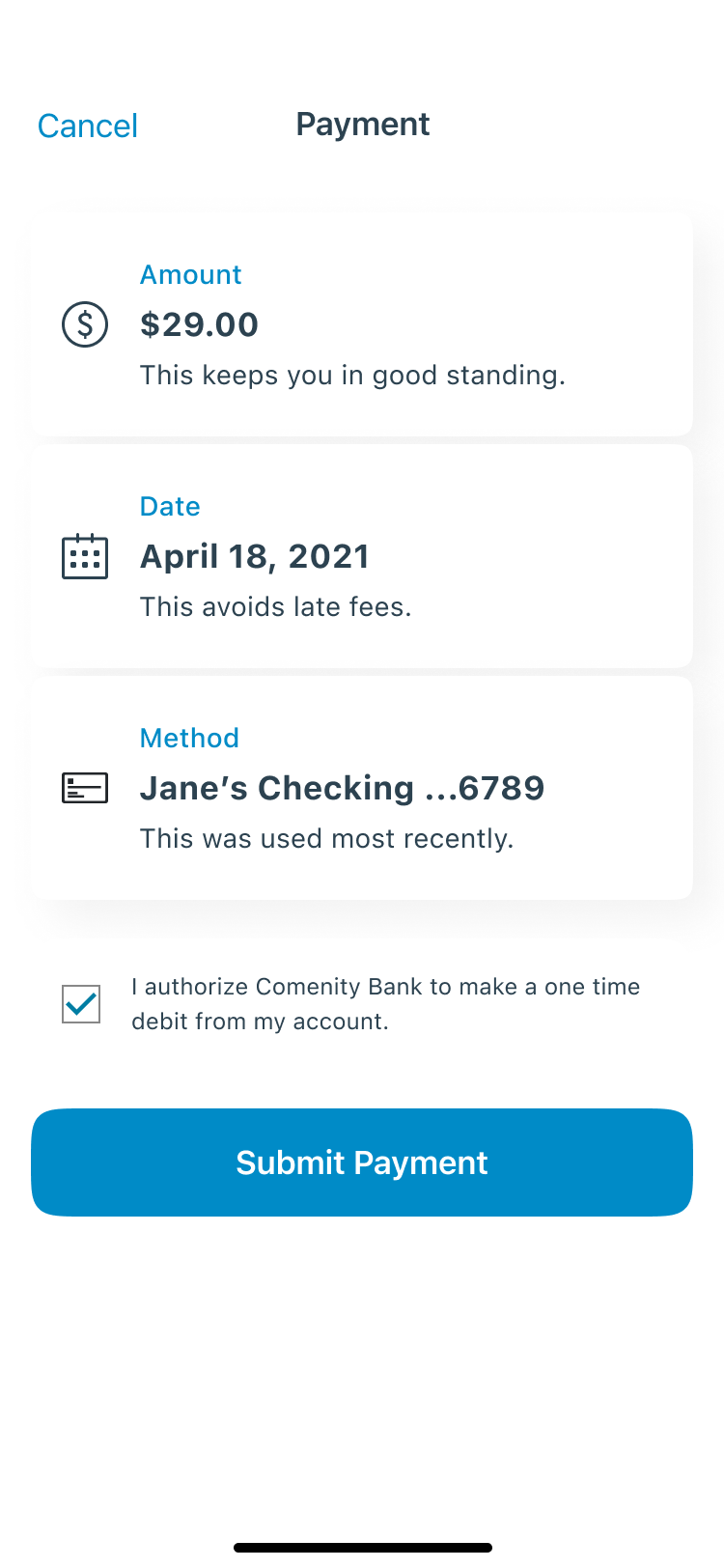
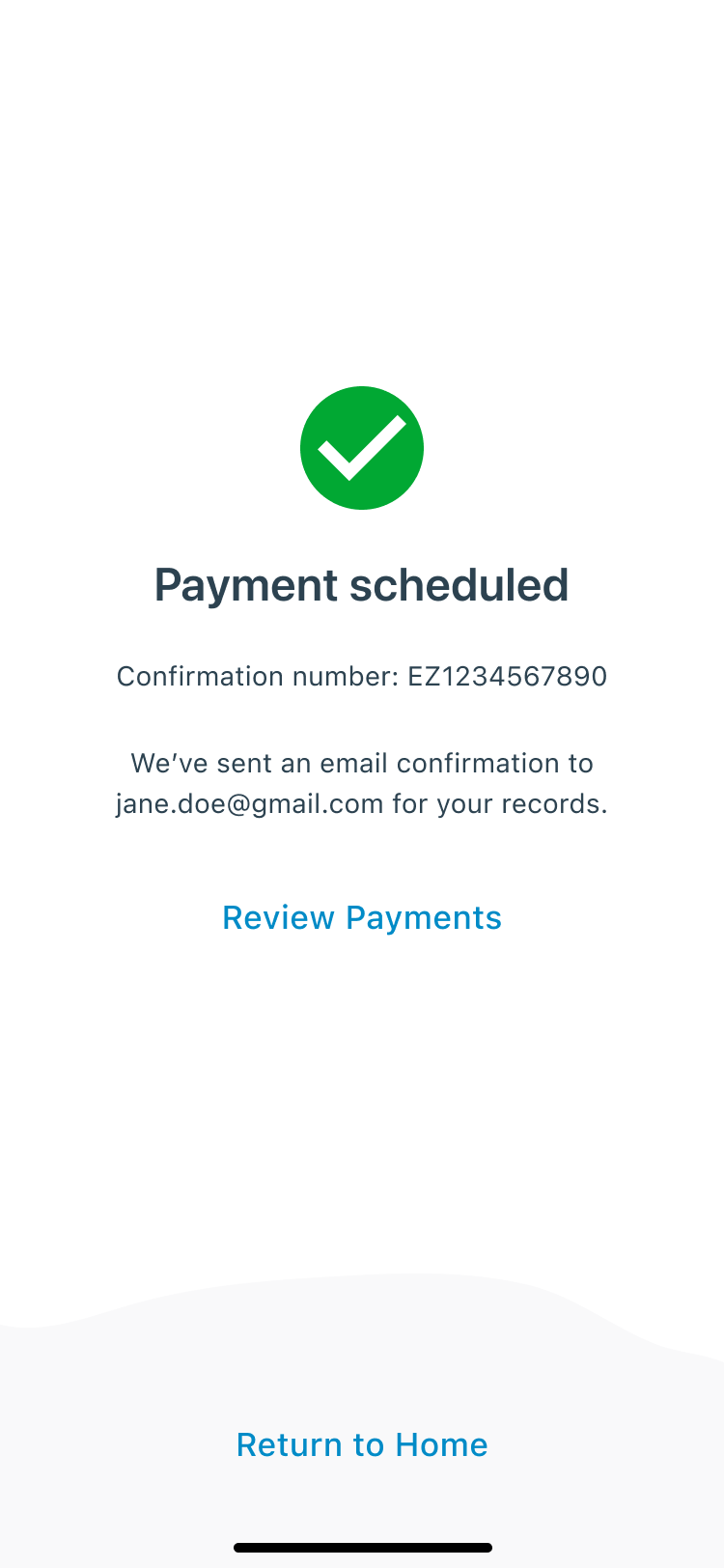
Key Moment: I created a Figma prototype to help the development team understand user flows and transitions. This also allowed us to look at how we might use animation to make more complex parts of the experience feel more personal and relevant and less about money.
Impact
We felt we’d created a redesigned online payment tool that helped customers feel informed and supported. This led to an increase in trust, understanding, and payments compared to our initial user interview feedback:
20% more users said they found the site trustworthy.
32% more users understood their payment options.
Payments increased by 11%.
Reflection
Conversations with collections customers on a genuinely human level helped my team and I design with empathy and turn a stressful experience into a positive one.
Simple, clear information can help people take action and feel in control of situations that would otherwise introduce confusion and anxiety.
This project showed me how much impact thoughtful design can have on people’s lives, especially during difficult times. It reinforced the importance of putting people first.